



2026 Climate Solutions Summit | April 24–25, 2026 | Rochester Riverside Convention Center | 123 E Main St, Rochester, NY 14604

Friday, April 24
12:30 Registration & Networking
1:00 Welcome & Opening Remarks
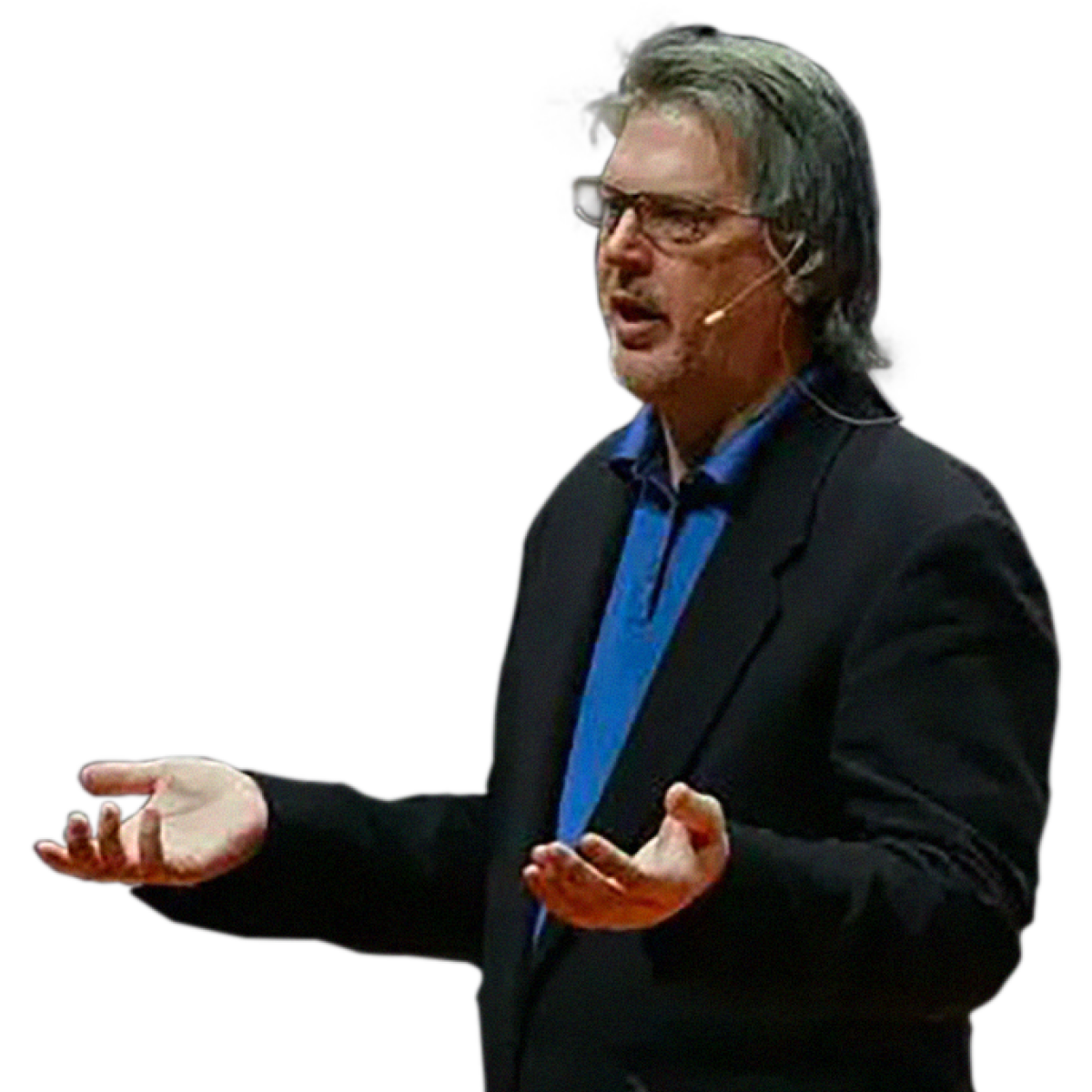
1:30 Keynote Address by Nate Hagens
Energy Blindness and the Economic Superorganism
2:15 Panel discussion: “What is the work that needs to be done to make our grid work for the future?”
3:00 Break
3:10 Sector-specific breakout discussions
4:00 Networking & Happy Hour
5:00 End
Saturday, April 25
8:30 Registration & Networking
9:00 Welcome & Opening Remarks
9:30 Keynote Address by Kristy Drutman
Community Is a Power Source: Finding Your Path in Uncertain Times

10:15 Big Questions Blitz
10:50 Break
11:00 Breakout Sessions #1
11:50 Lunch
12:45 Breakout Sessions #2
1:35 Break
1:45 Breakout Sessions #3
2:35 Networking & Power Up Fair
4:00 End
Breakout Sessions
11:00
-
Location: Room 1
Presenters: Dr. Emma Nelson, Angelina Hilton, Dr. Valerie Lou, and Greg Nelson
Description: When the familiar is dying and the new isn't yet born, where do we put our energy? Many of us are making bold and creative professional decisions in response to this question. Using storytelling and facilitated conversation, this workshop will explore: (1) if/when/how to participate in "business as usual," (2) personal stories of professional struggle or transition that intersect with our shared crises, (3) systems and experiences that have trapped people's energy, and (4) behaviors, relationships, and stories that have opened up new possibilities.
-
Location: Room 2
Presenters: Graham Hughes
Description: New York State currently relies on nuclear energy to produce roughly 20% of our daily electricity supply. Governor Hochul directed the New York Power Authority in early 2026 to pursue development of an additional 5GW of nuclear energy, which would more than double the state’s current capacity. Given these recent developments and the growing need to decarbonize our grid, improve reliability, and increase energy affordability, it is more important now than ever to discuss the role nuclear energy should play in a just transition. Join this workshop for a presentation and discussion on the benefits and drawbacks of nuclear energy, and the role it should, or shouldn’t, play in our energy transition.
-
Location: Room 3
Presenters: Linda Garrett, Marguerite Wells, and Parker Remelt
Description: Agrivoltaics offers farmers a unique opportunity to diversify income, optimize land use, and build long-term viability without having to choose between agriculture and solar energy. From grazing livestock under solar arrays to growing specialty crops, this dual-use approach can help farms thrive in a changing climate. Learn more about this innovative technology, how policy in NY can advance it, and hear from a farmer who is employing it.
-
Location: Room 4
Presenters: Kyle Rosenthal, Rob Kopacz, Conner Lorenzo, and Kiki Smith
Description: Sports have always energized Rochester from Indigenous roots to acting as a major cultural identity and economic influence today. As climate pressures disrupt winter seasons and reshape how fans and athletes move, that same energy can advance sustainable mobility, increase regional resilience, and enable collective, community-level action. This panel explores how the momentum of sports in our region can power climate solutions across the Genesee-Finger Lakes Region and beyond.
-
Location: Room 5
Presenter: Michael Henry
Description: What is energy justice? Why does it matter? Who does it benefit? And what can we do here in our region to advance it? This introductory session will dig into these questions and more, to provide participants with the knowledge they will need to effectively advocate for just and equitable climate solutions.
-
Location: Meet inside the main door of the Convention Center
Presenters: David Dick
Description: This tour will be offered twice at 11:00 and 12:45. Gather inside the main door of the Convention Center before walking (~5 minutes) to the hydro station. A maximum of 15 people may participate per tour – first come, first served. All participants will be required to sign a waiver.
12:45
-
Location: Room 1
Presenters: Emma Nelson, Jenna Welch, Kit Miller, and Abby Dopfer
Description: Do you feel like your attention has been co-opted, sold, or crippled? It's not just you. Many of us are tired of turning our presence into someone else's profit, especially at a time when our focus and discernment are so sorely needed. Join panelists who are practicing bold, imperfect, and creative ways to navigate content overwhelm, phone addiction, the barrage of bad news, algorithm overload, and our collapsed attention spans. Together, we'll explore not only how to reclaim our attention, but the explosion of imagination (energy!) that emerges when we can think and feel clearly again.
-
Location: Room 2
Presenters: Ryan Madden, Sarah Howard, and TBD
Description: Indigenous People have long been at the forefront of environmental stewardship and care. As non-Native society reckons with the impacts of its abuse of our natural world, and navigates a just transition off of fossil fuels and other harmful sources of energy, it is critical we engage Indigenous Peoples in this process. Join this panel for a discussion on the relationship between non-Native and Indigenous Peoples as we navigate the energy transition.
-
Location: Room 3
Presenters: Eric Hittinger
Description: This session will answer all your questions about batteries and energy storage, covering the technologies involved, their economics, and how they fit into the electricity system. We will also discuss the capabilities and limitations of energy storage, advances in battery technology, and the role that storage is expected to play in decarbonizing electricity grids. To ensure that audience topics and concerns are covered, ample time will be set aside for questions.
-
Location: Room 4
Presenters: Cody Donahue & Evan Lowenstein
Description: How and where we develop land profoundly affects how much energy we use. Unfortunately, "location efficiency" has not prevailed in the Genesee-Finger Lakes Region; instead, our development has sprawled significantly even in the absence of significant population growth. This low-density, auto-centric, and auto-dependent development has made transportation the top source of climate-changing greenhouse gas emissions in our region. What's more, low-density development also demands much more energy for infrastructure provision and maintenance, services, and the heating and cooling of more sprawling structures and developments. While there are many governmental and political factors that have led to a lack of "location efficiency" in our region, there are also many solutions available to us. This session will delve into the past, present, and future of "smart growth" in our region, and equip attendees with actionable strategies for moving our regional needle towards more energy efficient land use and development. We'll also open the floor to your stories about "location efficiency" in your lives!
-
Location: Room 5
Presenter: Patty Love
Description: What is possible if we transition our region to a truly solar-based economy (agriculture and forestry) that passively harvests the sun and converts it into energy (food) for humans in our community and beyond? How can we design such a system where the food/energy is equitably distributed? What jobs and businesses can emerge to create a regenerative economy? And what positive impacts can this have on local natural systems? This session will explore both the obstacles and opportunities.
-
Location: Room 6
Presenter: Shamus Clancey
Description: Incorporate some gentle movement into your day and experience this ancient Chinese medicine practice, designed to optimize the flow of energy within your body, mind, and spirit.
-
Location: Meet inside the main door of the Convention Center
Presenters: David Dick
Description: This tour will be offered twice at 11:00 and 12:45. Gather inside the main door of the Convention Center before walking (~5 minutes) to the hydro station. A maximum of 15 people may participate per tour - first come, first served. All participants will be required to sign a waiver.
1:45
-
Location: Room 1
Presenter: Abby McHugh-Grifa
Description: The costs and benefits of AI are important to understand, but difficult to sort out. For example, AI uses A LOT of energy and water, but AI can also be used to mitigate environmental problems. In addition, AI is changing how people work and engage with information, with both positive and negative consequences. This session is for anyone who is trying to make sense of what AI means for our present and future, in all its complexity.
-
Location: Room 2
Presenters: Mary Nicholas, Joanne Scanlon, Heidi Beutler
Description: New York State currently leads the country in both climate goals and community solar, but solar growth is threatened by stagnant solar goals, lack of policy and regulatory reform, and Federal cutbacks. As ratepayers face an energy affordability crisis, distributed solar offers a clear and proven pathway to reducing energy costs. Learn what the biggest challenges and opportunities are to the solar industry in New York State and what you can do to support solar growth and be a solar advocate.
-
Location: Room 3
Presenters: Jenna Lawson and Lee Klein
Description: The Finger Lakes Clean Energy Hub has been operating for over three years now and has referred over 1,000 clients to various energy efficiency programs. Come learn about the inner workings of the hub, from how we help clients find the programs that fit their needs to how we break down barriers to the clean energy transition. In addition, help us shape the future of the hub by providing feedback on what services you’d like us to prioritize over the coming years. Attendees will receive a free home energy savings kit for their participation.
-
Location: Room 4
Presenters: Ted Barnett, M.D.
Description: What if the most important energy system you interact with every day isn't electricity or transportation — but food? In this talk, Ted Barnett, MD frames the human body as an energy system, tracing how the foods we eat are transformed into the chemical energy that powers every movement, thought, and heartbeat. By following energy from sunlight to soil to plate to metabolism, a striking pattern emerges: the foods that are best for human health turn out to be best for planetary health too. Dietary choices, it turns out, are part of a much larger system. For an audience already thinking about energy transformation, this talk offers a new lens: the most personal energy transition of all.
-
Location: Room 5
Presenters: Patty Love & Margot Schwarz
Description: A folk school is a structure and place(s) for community-led practical arts and place-based skills development. The focus is on learning from our neighbors and creating useful objects in a supportive environment. Along the way, we also build relationships, strengthen our community resilience, and create the foundation for a regenerative economy. Competently applying these skills fosters creative energy that can lead students to do meaningful work making useful items and maybe even launching a new business. Inspired by a visit to Tarweed Folk School (TFS), Patty will co-lead a discussion on opportunities to build on existing initiatives to create a folk school in our area, along with Margot Schwarz, former Rochester resident and current teacher and organizer at TFS.
-
Location: Room 6
Presenters: Ginny Maier, Becky Collins, Christopher Utman
Description: To understand the barriers keeping residents who are concerned about climate change from reducing their own emissions from gas vehicles or home heating equipment, we collected surveys from hundreds of visitors at tabling events around Monroe County in 2024 and 2025. In this presentation, we’ll share what we learned from these surveys — and dozens of conversations — at these events. We’ll also suggest strategies for using this information as a source of energy to help us move forward on our goals of reducing fossil fuel emissions 80% by 2050.