



Stories from the Community
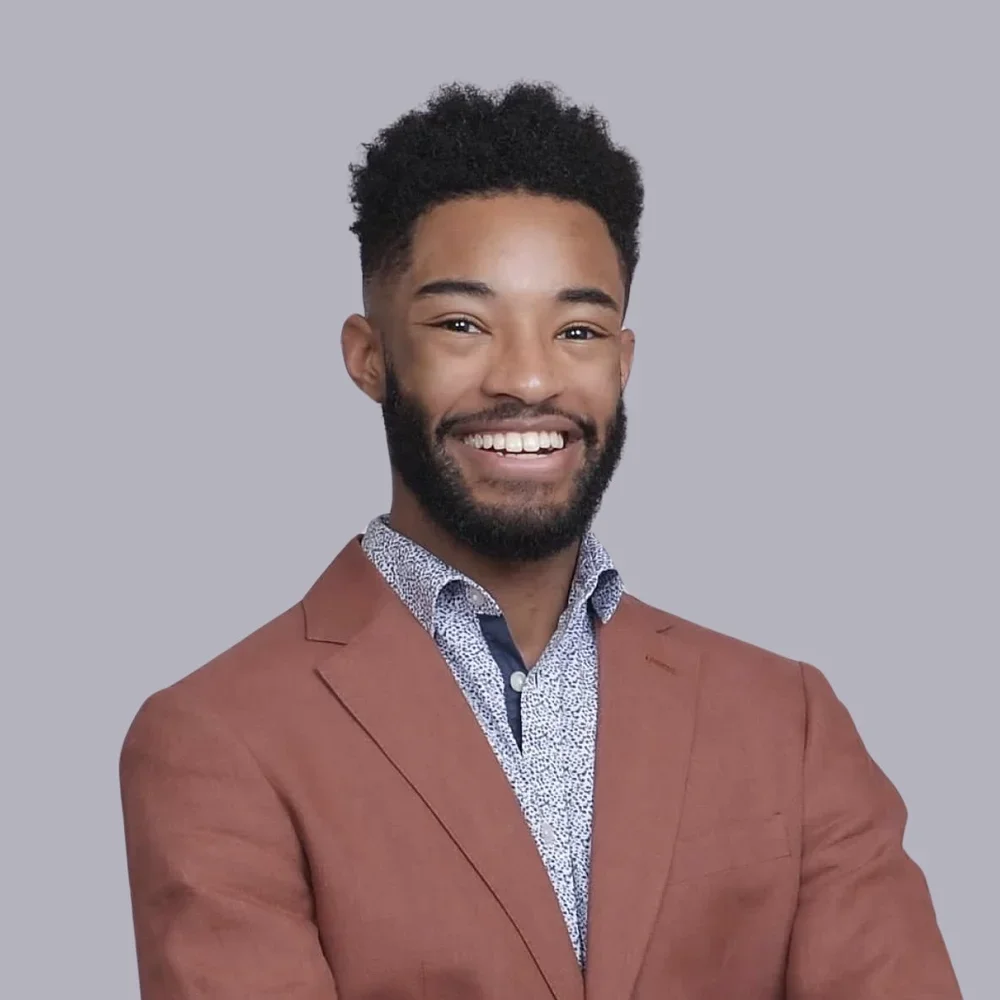

Meet Michael!
From a young age, Michael Henry remembers spending time outdoors and exploring areas along the Genesee River. He loved it! Whether he was observing nature, hanging out with friends, or playing soccer, it was hard to keep him indoors. He also clearly remembers being in elementary school and noticing that greenspace wasn’t a thing in some neighborhoods. The streets and yards lacked trees, there weren't parks to play in, and everywhere felt hotter in the summertime.
It was also around this time that he started to develop an eye for urban planning. Even though he was only ten years old, he picked up pen and paper and started redrawing Rochester. In little Michael’s Rochester, nature was at the center. Everyone had access to the river, trees on their streets, and greenspaces to play in. Doing this activity, he noticed in a concrete way that while some neighborhoods had greenspace, lower income neighborhoods did not. This ignited his passion for environmental justice.
As Michael got older, he pursued activities and education that challenged and expanded what he knew about the environment, city planning, and equity. He started to probe deeper into questions like why industrial parks were where they were, how housing conditions directly connect to health outcomes, and the economic impacts extreme weather puts on people’s utility bills. Being a volunteer soccer coach for a city league, Michael has seen firsthand the struggle some families face. They want their children to participate in team sports, make friends, and have fun, but they are also balancing household finances, transportation challenges, and health & safety issues at home.
Through this passion for the outdoors and environmental justice, Michael became aware of the Climate Solutions Accelerator. The mission deeply resonated with him. He firmly believes all people have an equal right to a clean, healthy environment. Being part of finding local solutions to address climate change through community involvement is a big part of that. He waited for the right opportunity to apply. Today in his role as Collective Impact Manager at the Accelerator, his interests as a child and young adult have come full circle.
For Michael, being “Powered by Community” is the same as being “Powered for Community.” He’s passionate about working to help the people who have been most harmed by environmental injustice. Working with communities and for communities energizes him to increase access to climate solutions and mitigate the negative impacts of climate change on local families and neighbors.
Katie Rygg
With two daughters, having a clean, safe, and healthy community is very important to Katie. Not just for her daughters, but for our entire region and for the future. Before moving to the greater Rochester region, Katie taught high school science in Massachusetts and California for 15 years. Part of her lesson plans often included climate science. Beyond educating her students, she made it a priority to educate herself and consider what she personally could do to address and mitigate climate change.
Soon after she got settled in Rochester, she started to reach out to groups that were part of the local climate movement. First, she attended meetings and joined the local chapter of the Citizen Climate Lobby. She found a place where she could build relationships with other people who care about our local environment and building a healthier community for future generations. Through these relationships, she learned about Color Your Community Green groups and helped co-found Color Penfiend Green. Her involvement in these organizations allows her to be engaged on different levels–from being part of community events in her own neighborhood to advocating across the state and on the federal level.
When Katie thinks about her involvement, she values being able to talk with elected officials and being part of statewide coalitions. Having the opportunity to have conversations with local leaders is when she personally feels the most empowered. While addressing climate issues can feel overwhelming and politically charged, she believes real opportunities could be identified when bringing people together with different viewpoints. It’s an opportunity to move the needle on climate change by finding solutions that work for the entire community, not just one group. For example, she feels that the advances in battery storage technology is something that could change the conversation.
Having the opportunity to learn about successfully implemented climate solutions and seeing their potential locally is part of why Katie gets involved. She gets excited when she sees realworld examples, like Australia integrating electric vehicle (EV) charging into virtual power plants (VPP). VPPs link thousands of energy devices—like home batteries, solar panels, EVs, and smart thermostats so they function like a single traditional power plant. Examples like these demonstrate that we could work together as a community to help balance the electricity grid and lower household energy costs at the same time while also reducing carbon emissions.
Currently, Katie serves as a Climate Solutions Accelerator board member and continues to serve as a co-founder and co-lead of Color Penfield Green, as well as a co-lead for the Rochester chapter of Citizens Climate Lobby. Her background as a science teacher also led her to help facilitate Color Your School Green efforts and ensure the Accelerator consistently has youth representation on its board of directors.
A mom and former school teacher, Katie is another example of an everyday community member being “Powered by Community, for Community.” Through her volunteer and advocacy work in the community, Katie often thinks about the phrase “Action is the antidote to despair.” She believes that through action, we can move from feeling helpless into actively feeling a sense of hope. That is why she draws energy from being part of the Color Your Community Green network. She loves watching community members come together to improve their neighborhoods through climate action.
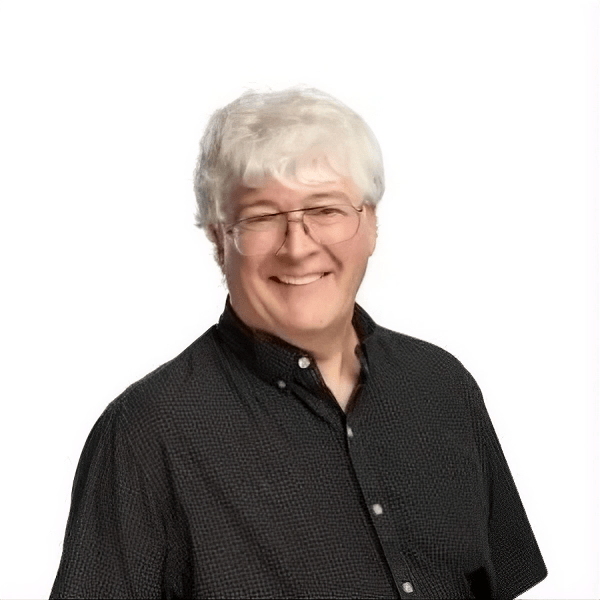
Meet Mike!
The clean energy transition is creating new technologies, new industries, and new jobs across our region. The question is: who gets connected to those opportunities?
That’s the challenge Mike Marvin has been working on through NextCorps and the Clean Jobs Collaborative—helping grow the clean energy workforce while making sure people who have historically been left out of these opportunities have a pathway in.
“We need to save the planet,” Mike said. “But the people who can come in and help us save the planet are people who have been left out of these discussions to a large degree.”
The work starts long before someone submits a job application. People need to know these careers exist. They need access to training, support, employers, and clear pathways into the workforce.
And increasingly, Mike has found that no single organization can build those pathways alone.
The Clean Jobs Collaborative was created to bring different parts of the workforce system together around that challenge. The work has included helping people better understand clean energy careers, connecting them to training and support services, identifying employer needs, and looking at how companies can better welcome people from different backgrounds into the workforce.
It was through that work that Mike became more connected to the Climate Solutions Accelerator.
Accelerator staff were already working on many of the same questions around clean energy, education, workforce development, and access. Instead of creating parallel efforts, the groups began finding ways to collaborate and share information, relationships, and resources.
“That’s one of the things that I really appreciate about the organization,” Mike said. “Just the willingness to collaborate and share resources.”
That collaboration has taken different forms.
Sometimes it has meant combining information and employer contacts to better understand where clean energy jobs are growing. Other times it has meant going into schools and talking directly with students about what clean energy is and what kinds of careers exist within it.
One recent project showed what can happen when those connections keep expanding:
The idea started with creating more opportunities for young people to learn about clean energy.
Through relationships with RIT, Mike and his partners helped connect students to an Energy of the Future summer program. The Clean Jobs Collaborative committed funding to help students who otherwise may not have been able to participate attend the camp.
Then another organization stepped in.
The Workforce Development Institute helped support scholarships as well.
Then another connection opened another opportunity.
Through the Accelerator’s renewable energy network, Haylee Farrington, who was connected to the development of a solar farm in Mount Morris, helped arrange a tour for students.
There, students were not only able to see how solar energy works, they also learned about the workers who build that infrastructure, including electricians, laborers, sheet metal workers, and other skilled trades.
That connection led to another experience: a visit to the Sheet Metal Workers training center in Rochester.
What began as a summer camp became a much wider look at what a clean energy future could actually mean for a young person. Students were exposed to renewable energy, skilled trades, union careers, workforce training, and people doing this work across the region.
For Mike, that is the power of community.
“We have this community of people who are very open to working together,” he said.
That openness matters because many of the barriers between education, workforce development, climate organizations, employers, and community groups are not as fixed as they can sometimes seem.
Mike describes the work as “erasing” those lines. “That’s the power of community,” he said. “Erasing a lot of the lines that are really not there.” And when those lines begin to disappear, opportunities can grow. An education program can connect students to a union training center, a climate organization can connect workforce partners to renewable energy companies, and one funding source can help a student enter a program they might not otherwise have had access to. One relationship can lead to another and in this case, everyone involved gained something: organizations strengthened their own work, new partnerships formed, and more resources were shared. Most importantly, young people were introduced to possibilities they may not have seen otherwise.
“The bottom line was we’ve got a bunch of young people exposed to things that they wouldn’t have been otherwise,” Mike said. That kind of access is central to how Mike thinks about the clean energy transition.
His own interest in climate began long before his workforce development work:
He grew up near a river and remembers it as a place of refuge and connection to the natural world. “As a kid, that was my sanctuary,” he said. That connection gave him a lasting desire to protect natural spaces and preserve the environment. At the same time, he became increasingly aware of the economic, racial, and social barriers that can determine who has access to opportunity. Clean energy workforce development brought those two concerns together.
“It’s always been a focus to kind of take those lines down—to erase those lines.”
That means making sure the people helping shape the clean energy future reflect more of the communities that future is supposed to serve. It also means recognizing that climate action can look like many different things: developing new technology, installing solar panels, learning a skilled trade, training workers, supporting employers, educating students, or helping someone understand that a career they had never considered is actually within reach.
It can look like bringing the right people together.
That is part of what gives Mike hope about where the Genesee-Finger Lakes region is headed.
“Climate Solutions Accelerator is one of my big hopes,” he said, pointing to the work already underway to engage people who care about climate and connect them to opportunities to participate. He is also encouraged by the growing alignment between workforce development, economic development, education, and climate work across the region. But he is quick to point out that creating an opportunity is only the beginning.
After watching students participate in the Energy of the Future program, the next questions became obvious:
Now what? How do those students stay connected? How do they keep learning and how do they get more opportunities to speak, explore careers, meet employers, or see themselves as part of this work?
Those are not just questions for one summer program, but for the entire region, because introducing someone to an opportunity matters. Helping them take the next step matters even more. That’s where community becomes powerful. A connected community can help build pathways to a healthier, more equitable, and regenerative future.
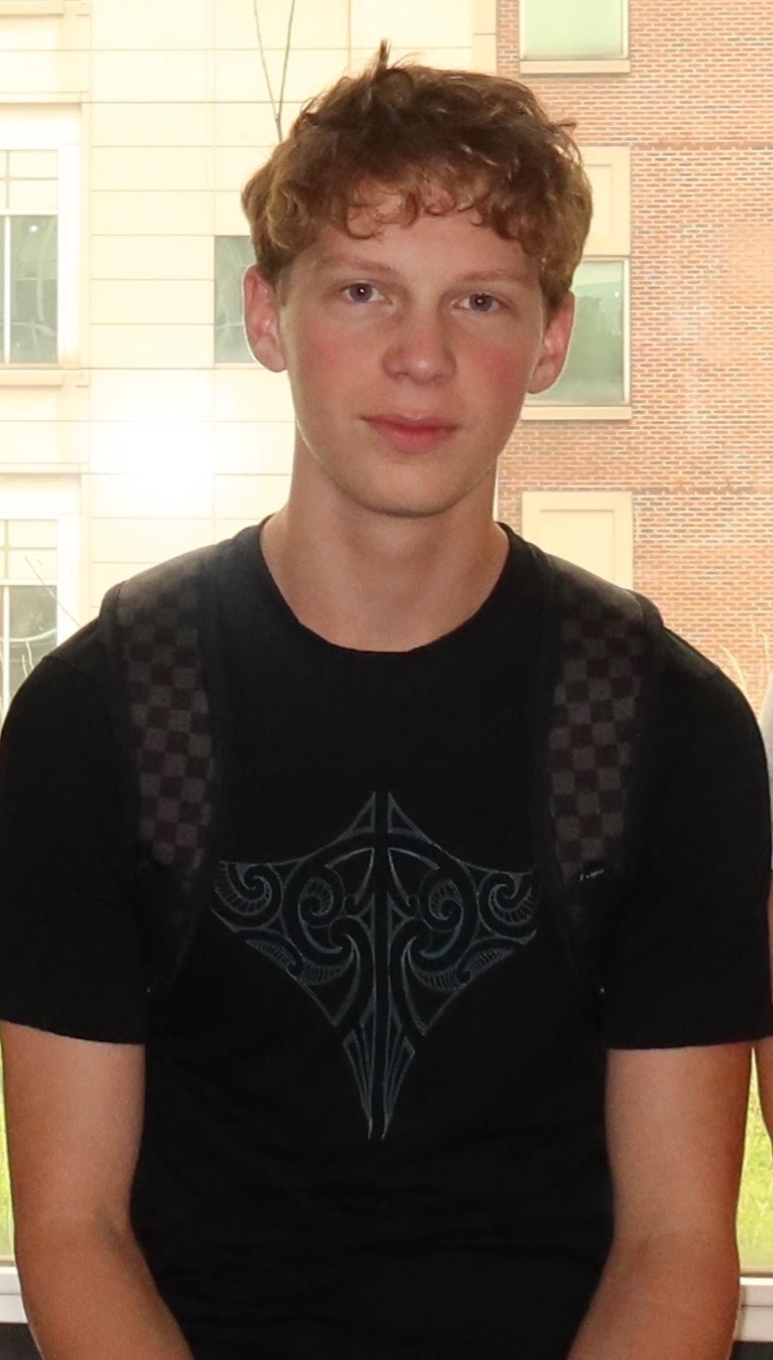
Meet Devlin!
Devlin was 10 or 11 when climate change stopped feeling like something happening somewhere else.
He picked up The Uninhabitable Earth and started reading about what a warming planet could mean for communities, economies, ecosystems, and everyday life. “I read the facts and it shocked me,” he said. “From there, I needed to do more.” That impulse, to do more, has shaped much of Devlin’s life ever since.
Now, at 17, and in his senior year of high school, Devlin has organized cleanups, helped raise money for climate-related projects, spoken publicly about climate policy (including Climate Solutions Accelerator press conferences), started a nonprofit with his family and peers, and has been partnering with climate organizations across the Rochester region.
His connection to the Climate Solutions Accelerator began gradually: volunteering at events, showing up when he could and finding more ways to participate. Then, in 2025, he was invited to join a panel at the Climate Solutions Summit. “I met a lot of people there and I got really involved with the Accelerator community, and in a lot of other communities as well.”
For Devlin, that is where community becomes powerful.
Through the Accelerator and DARC Earth, an organization he started with friends and family to support grassroots climate action, Devlin learned that caring about an issue may be what gets someone started, but making something happen and creating change often requires other people.
As his involvement and efforts grew, Devlin began to see a common challenge. “It’s not a lack of energy,” he said. “Everyone’s energized, everyone’s excited, everyone’s ready to act.” People care about climate change and want to do something about it. What’s often missing are the connections, resources, and support that help turn that concern into action. That’s where community becomes powerful. “You need people, you need energy, and you need resources. You need coordination. You need organizations like the Climate Solutions Accelerator.”
That realization helped shape the way Devlin thinks about climate action more broadly. You do not have to know everything before you participate. You do not have to have the perfect speech before you speak. And you do not have to wait until you have more influence, more resources, or more experience before you begin.
Devlin is open about the fact that he has learned through doing. There have been moments when he stumbled, moments when he was not yet the right voice for something, and moments when he had to keep developing his ideas.
But that, he says, is part of the process. “If you care enough, if you keep going, there will be a next time.”
That next opportunity might be volunteering at an event, joining a conversation, sharing an idea, organizing with friends, supporting someone else’s project, showing up to a public meeting, or simply beginning to learn more about an issue affecting your own community.
For young people especially, being invited into those spaces matters.
Devlin believes youth voices can help make climate change feel less distant. When adults hear directly from the generation that will live with many of its long-term impacts, the issue becomes harder to separate from everyday life.
“It’s not someone else’s lives, but rather their own,” he said. “It’s not someone else’s children, but rather their own.”
And although Devlin’s perspective on climate change carries urgency, what keeps him engaged is deeply personal. “The people of Rochester are my people. The city of Rochester is my city.”
After high school, he hopes to study political science, public policy and economics, with interests in government and law-based advocacy. Even if that path takes him outside the region for a time, he sees Rochester as part of his future.
For Devlin, taking action is ultimately about protecting what you care about. That may be one of the simplest places to begin:
Find what you care about.
Bring what you have.
Then connect with people who can help you turn that care into action.